“Cleanflo provided professional designs, supplied a state of the art rainwater reuse system and completed the installation on time.”

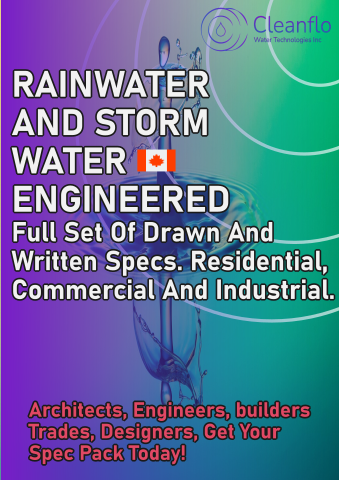
At Cleanflo we design and build premium residential rainwater harvesting systems tailored to your specific needs. Contact us now for a FREE quote!

What Our Clients are Saying Across Canada:

Nova Scotia, Alternative to Drilling a Well - Drinking Rainwater
“The lot where we are going to build is located on the coast and doesn’t have any use able source of water. Local wells have been contaminated with salt water and hauling water can be cost prohibitive,”
“As an engineer, I knew I needed something more sophisticated than a lot of the do-it-yourself kits out there. I needed a company that offered a design service not much different than how an architect would provide plans for a house. We wanted a professional to put together a design package that we could supply to our builder, and that’s exactly what we got from Cleanflo Water Technologies.”
Craig Jansen, Nova Scotia

Kingston, Ontario Alternative to Drilling a Well - Drinking Rainwater
“We are very pleased with our water quality for general household and drinking water. I’m happy that we chose rainwater as our supply. Knowing that we are reducing our footprint, have a safe system to supply clean and very good drinking water for our family is very important. In our area, wells are questionable in quality and supply, so knowing that we have a good source for water puts our minds at ease”
Jo-Anne Hopkins, Ontario

Quebec, Alternative to Drilling a Well - Off-Grid Cabin - Drinking Rainwater
“I bought a rain water harvesting system from Cleanflo for my cottage; Our needs were evaluated. The submission was detailed.The hardware is first class. The installation instructions and maintenance instructions are thorough. We will be installing the system in spring, as my cottage is off the-grid and only accessible by boat or snowmobile. Here are a few pictures of the cottage and tanks carried over the lake by snowmobile”
Hugo Delorme, Quebec

Saskatchewan, Alternative to Drilling a Well - Drinking Rainwater
Jenine Demyen, Saskatchewan
“We were building and needed to put in all services. All the wells in the area were dug to at least 400 feet and neighbors had told us the quality wasn’t great. It just made sense to harvest rainwater from the roof to use throughout our house and yard.”
“I pay for filters, but that cost is less than a standard monthly water bill. Plus, you don’t actually realize how great it tastes until you drink other water.”

British Columbia, Cabin - Outdoor Shower
“Cleanflo was a big help to us in setting up a rainwater system for our guesthouse. They were available for questions, sent the parts promptly and was professional in all our dealings with them. We love our new rainwater system, especially the outdoor shower!”
Gwyneth Nickel, British Columbia
Residential Rainwater Systems
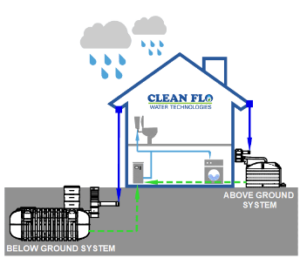
Residential Products
Cleanflo manufactures a complete product line of Residential Rainwater Harvesting, Storm Water Management, Water Treatment and Irrigation Systems. Our systems are designed and built in Canada for use in extreme Canadian climates

Commercial Rainwater Systems

Commercial Products
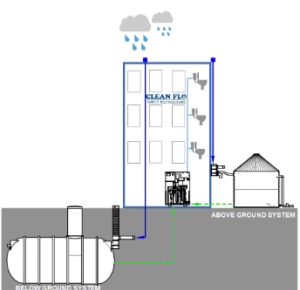
Cleanflo manufactures commercial and industrial Rainwater Harvesting, Storm Water Management, Water Treatment, Pumping Skids, and Fluid Automation Systems. Cleanflo is a UL 508A Industrial Panel Shop providing in-house control, automation and monitoring solutions.
Additional Services
Residential Installation
Complete installation for all residential projects from simple rain barrels to complex systems.
We can provide a FREE quote today!
Commercial Installation
Design & Engineering
Storm Water Management Reports, Site Servicing, Storm and Rainwater Detailed System Design. Stamped and Sealed.
Contact today for specification and drawings.
Maintenance and Service
Permit Approvals
Design & Engineering
Offering consultation and feasibility reports on small to large scale rainwater, storm water, water treatment and fluid automation systems.
Contact Cleanflo today for feasibility reports, ROI analysis, and “proof of concept” discussions.
Frequently Asked Questions - FAQ
What are the benefits of Rainwater Harvesting?
The three main benefits for rainwater harvesting are:
- Financial benefit through water savings.
- Meeting storm water management regulations.
- Access to potable water.
The three main benefits for rainwater harvesting are:
An emerging movement to create more environmentally ethical and sustainable communities which are concerned with diminishing clean water sources are participating in the use, re-use, and recycling of water and energy resources. Rainwater harvesting can contribute to the overall goal of sustainable housing and community infrastructure. It can be part of a total package of sustainable home design, or a first-step toward participating in the green-lifestyle paradigm. As well, over time there can be a significant savings in cost of water and charges for storm water.
- Financial saving from water.
- A FREE source of water which is available to all from Mother Nature.
- A renewable, sustainable, and a high quality source of water.
- Soft water with a neutral in pH.
- Free from disinfection by-products, salts, minerals, and other natural and man-made contaminants.
- Result in a reduction of water bills including city storm sewer charges.
- Avoid municipal watering schedules, or watering bans in dry climates.
- Alleviate demand on aging municipal water supplies. The average Canadian uses 329 litres of water a day. In the summer months, water consumption doubles with 50% of treated water being used to irrigate lawns.
- Manage storm water by catching it and reducing the amount of flooding your foundation area
- A strategy to actively improve the environment.
- Store seasonal rainfall tfor use in times of drought and municipal water bans.
- A means to reduce erosion, property flooding, and contamination by capturing the majority of urban runoff from a house.
- Reusing water saves considerable amounts of energy. For example, 33% of the City of Toronto’s electricity use in a year is spent on water pumping and treatment.
What is the difference between rainwater, storm water, grey water, potable water, and other waters?
Rainwater
Fresh precipitation from the sky that has not touched a ground surfaces. A roof surface maintains the rainwater quality.
Stormwater
Rainwater from a rainfall event that has touched the ground surface and un managed at the source. This water must be managed further down the flow path by storm water systems.
Ground Water
Water present below the earth’s surface; i.e. aquifers, wells.
Surface Water
Water present on the earth’s surface; i.e. lakes, streams, rivers.
GUDI
Groundwater Under Direct Influence of surface water; i.e. shallow wells, foundation drainage.
Potable Water
Water safe for human contact (showers), consumption, and food preparation
Grey Water
Once used water discharged from washing machines, showers, bathtubs, bathroom sinks, etc. Grey water does not have fecal/urine contamination.
Black Water
Once used water discharged from kitchen sinks and toilets and may contain fecal/urine contamination.
What is Rainwater Harvesting?
Rainwater harvesting is the process of both:
- Collecting Rainwater
- Reusing Rainwater
Rainwater Collection
Accomplished using a rainwater storage systems that pre-filters and collects rain through catchment, conveyance, and storage. (Rain water must be from a roof surface, if it touches the ground it becomes classified as storm water and is much more contaminated then rainwater. Storm water can be reused but using slightly different technology , due to its high contamination it is more expensive to treat than rainwater.)
Rainwater Reuse
Accomplished using rainwater pumps, filters, treatment, and controls to get the rainwater where it is needed and to ensure it is safe for the intended use.
If planned correctly a rainwater harvesting system can supply all your water needs and be used for everything!. Rainwater harvesting systems are being increasingly integrated in urban settings around Canada to reduce water demand on community infrastructure. Rain harvesting can be as simple as a rain barrel at the end of a downspout or as complex as a multiple-end-use underground storage system. Harvested rain can be used outdoors for irrigation; indoors for toilet flushing and laundry; and if sanitized, as drinking water. The system scope, treatment method, and technologies will vary depending on end-use of the water. Cleanflo offers complete solutions form roof to tap and every detail in between.
What can Rainwater be used for?
Cleanflo Rainwater Systems are designed to be used for three different levels:
- Irrigation only
- Toilets,laundry, and irrigation
- Drinking potable water and human contact
Rainwater can be used for any purpose you may have for water.
What laws, regulation or guidelines govern rainwater harvesting?
Rainwater harvesting systems are governed buy the local building code in each jurisdiction.
Cleanflo Rainwater systems meet CSA standards for rainwater and storm water re-use. Cleanflo systems are engineered and qualify to meet permit local law, regulation and guidelines. Each municipality has its own guidelines. Cleanflo will ensure your project can be permitted and is successful.
- A comprehensive rain harvesting system that is plumbed into a building requires expert advice for the design of the system and assistance with seeking regulatory permission.
- When installing a rain harvesting system, ensure that there is suitable warning to ‘not cross connect rain harvesting lines with indoor potable lines’, and mark all pipes and faucets, both indoor and outdoor, as ‘non-potable supplies not suitable for drinking’.
- Connect your cistern or rain barrel to another storm water management system like a soak away pit to infiltrate excess water into the ground when the system is full.
How do I determine the potential volume of rainwater that can be collected from a roof?
The Gross potential volume of rain that can be harvested from your roof is based on two main factors roof area and rainfall. A single square metre (ROOF AREA) multiplied by 1 millimetre of rain (RAINFALL) equals 1 litre of water, is the rule of thumb.
The actual amount of rainwater harvested will be less due to loss from wind, roofing material, pre-filter and overflow events.
What is the best size for rainwater cistern?
Determining rainwater systems cistern size is based on three factors:
- Catchment area (roof area)
- Intended use and anticipated water needs (liters/day or rainwater required)
- Possible rainfall amounts (location)
Based on the optimal volume of rainwater available to collect, the user must determine if the anticipated water needs will exceed available rainwater. If the user requires additional water, this can be achieved by topping up the rainwater with a municipal water supply, or by incorporating the capture and use of grey water sources.
The Canadian Mortgage and Housing Corporation has published guidelines for rainwater harvesting systems which include tables for estimating the optimum rainwater cistern.
How will freezing impact my rainwater system?
Cleanflo rainwater systems can be used all year and WILL NOT freeze.
- Seasonal rainwater systems need to be decommissioned in winter months. A seasonal rainwater system uses a rainwater tank that is NOT heated or buried below frost line.
- Year -Round rainwater systems DO NOT need to be decommissioned in winter months. The rainwater tank is usually in a heated location or buried below frost line. As well the inter-connective piping is installed to meet Cleanflo requirements for Year – Round rainwater system installation.
Why Buy From Cleanflo ?
Our Vision
We believe every person on Earth should have access to safe, clean water.
Our Mission
To ensure all Canadians have access to safe, clean water.
Our Values
Safety, Quality, Honesty, Innovation, and Transparency
Our Strategy
Manufacture First Class rainwater harvesting, storm water, water treatment and fluid automation systems.
Our Strength
Our ability to design and manufacture the entire system under One Roof. From concept to production, from mechanical equipment to software to hardware and every detail in between.

What makes Cleanflo Water Technologies One of Canada's Leading Providers in the Industry?
- Experience: Cleanflo has been in business since 2012
- Professionalism: Cleanflo invests in customer satisfaction
- Knowledge: Cleanflo has a strong knowledge base
- Originality: Cleanflo is an industry innovator
- Suppliers: Cleanflo works with suppliers across Canada
- Product: Cleanflo’s products are industry standard

Published Case Studies
Commercial Storm Water With a ROI
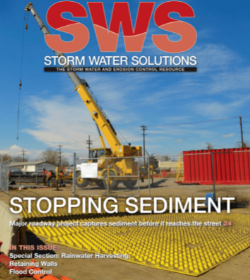
Commercial rainwater harvesting provides properties with two benefits. Firstly a rainwater harvesting system will MEET all requirements for storm water management regulated by the City. Secondly rainwater harvesting provide a Return On Investment so your storm water system pay for itself.
Water Harvesting and Re-use
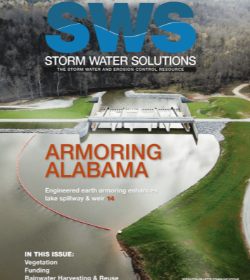
Rainwater Harvesting is becoming a standard technology for accessing potable water. Well water is more and more of a gamble. Further more countless wells are going dry each year. across Canada.
Rainwater Re-use "Front Page Article"
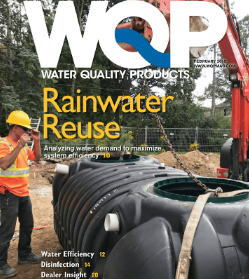
Cleanflo Water Technologies of Canada made the front page of this February 2018 issue of Water Quality Products Magazine. Our proprietary Rainwater Harvesting technology used in Toronto is becoming increasingly popular. This technology can save you significant money on your water bills each month.
Water Harvesting, Alternative to Well
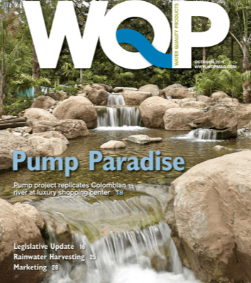
Rainwater can be used for drinking water. Many homeowners across Canada are choosing rainwater as opposed to drilling a well. Drilling a well is a gamble and many homeowners loose thousands of dollars when drilling and not finding water. This makes rainwater harvesting the ONLY logical choice!